How to Choose the Right Lead Generation Strategy for Your Coaching or Consulting Business
How to Choose the Right Lead Generation Strategy for Your Coaching or Consulting Business
So many coaches I know get stuck when it comes to choosing a lead generation strategy. They see somebody else doing something well and assume that must be the thing that works. Should I run ads? Post more content? Start a podcast? Get on YouTube? Here is the problem with that thinking: you do not see the team, the budget, the email list, the sales process, or the authority they already built before you saw the polished version on your newsfeed.
You cannot copy somebody else's marketing strategy without also copying their capacity, their resources, and their audience. And since you probably do not want their entire life, payroll, or monthly overhead, you have to be more discerning. I talked about this on the Booked & Unbothered podcast — here is the deeper breakdown.
The Goal Is Not to Do Every Damn Thing
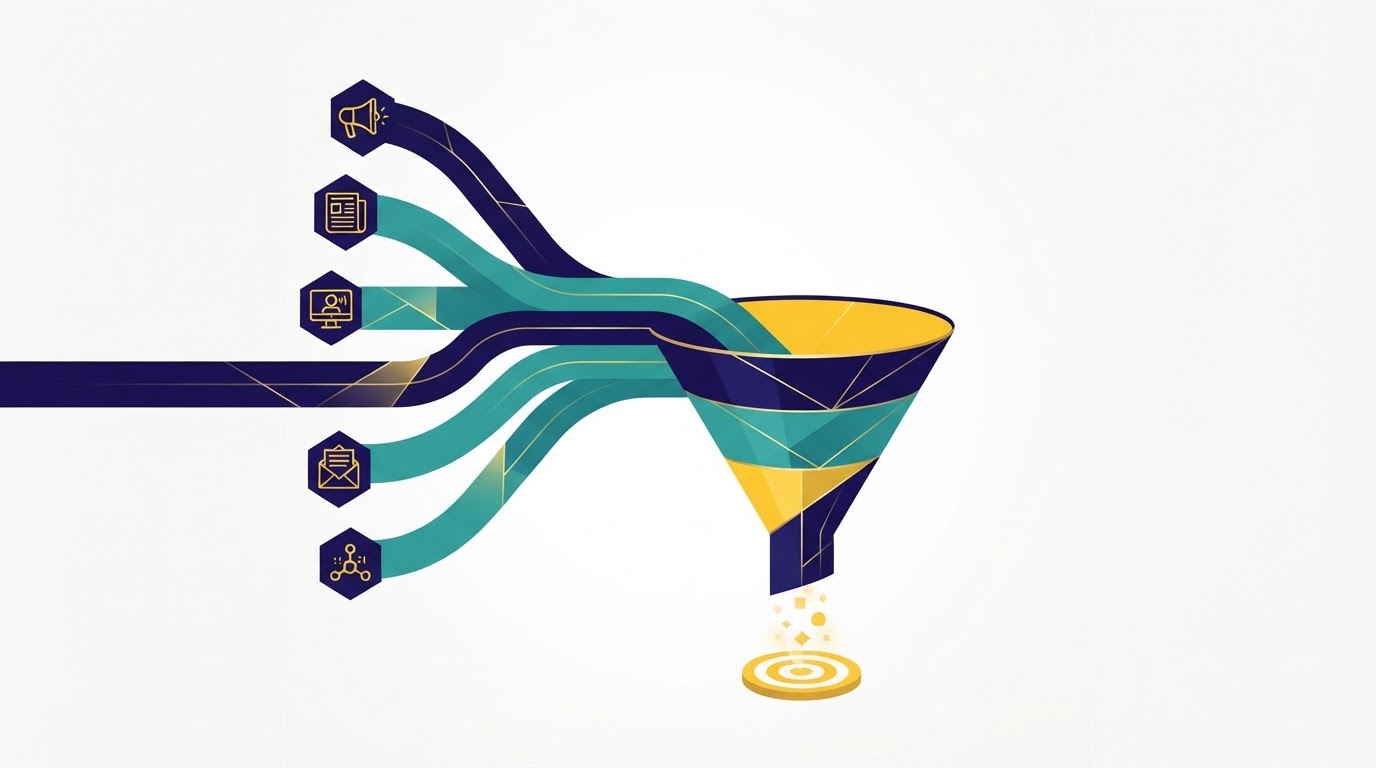
The goal is not to be everywhere. The goal is to choose one primary way to generate leads and one supporting strategy to build authority and trust so the right people move. There are five broad ways that happens: what you own, what you earn, what you pay for, the relationships you build, and the demand you capture through search.
Every strategy has a bill. Sometimes that bill is money. Sometimes it is an invoice that costs you patience, capacity, or time. If you choose a strategy without looking at what it will cost you in the long run, you are setting yourself up for something you cannot sustain.
1. Own Marketing: What You Control
This is the part of your marketing that stays with you. Your email list, your website, your podcast, your CRM, your communities, your client list, and your lead database. You control the relationship, the messaging, and the cadence. You control what happens after somebody finds you.
That matters because most people are not going to discover you at 10:14 a.m. on a Tuesday and buy your high-ticket offer by lunch. They need time to hear how you think, understand your methodology, and see what makes your approach different. They may need the problem to become more urgent or the budget to open up. Own marketing gives you somewhere to continue that relationship without hoping the algorithm brings that same person back to you.
The asset is not about the number of contacts. The asset is the relationship you continue to build with them.
This is why posting on social media by itself is not a complete strategy. Social media can help people discover you, but if all of that attention lives on one platform, you are building your front porch on somebody else's property. Own marketing becomes especially important when you sell high-ticket, high-trust offers with a longer sales cycle.
2. Earn Marketing: Borrowed Trust
Own marketing tells people what you think. Earn marketing helps them believe you are not the only person who thinks you are good. This is your testimonials, client case studies, reviews, media features, and collaborations. Somebody else is lending you credibility and access.
When a past client explains what changed because of your work, the buyer does not have to take your word for it. When a trusted host brings you onto their podcast, you enter a room through trust borrowed through somebody else's lens. Think of earn marketing as borrowed trust, and borrowed trust can open doors much faster than another post saying you are passionate about helping people reach their goals.
The common mistake here is waiting for these things to happen. You finish a project, the client is happy, and everybody goes back to their daily lives. You do not collect the testimonial. You do not ask for the introduction. If you have real results, stories, and a point of view, you already have material for earned marketing. Stop treating proof like a private compliment and build a process around it.
3. Paid Marketing: Buying Reach
At some point, especially when growth feels too slow, paid marketing starts looking attractive. Facebook, Instagram, Google ads — you are paying for context, reach, and placement. You put money behind what was already working, more people see the offer, and ideally more leads come out of it.
Paid marketing can help a business move faster. It can prove a message that is working in front of more people. It helps you test, create more demand, retarget visitors, and scale a path that is already converting. But paid attention is not magic. Ads do not fix a weak sales process or a weak offer. They do not clarify an unclear message. They amplify things.
If the foundation is strong, that is a beautiful thing. If the foundation is shaky or confusing, you have paid to distribute the confusion a lot faster. Take it from somebody who has invested thousands in ads: they do not always work. You do not know how long the coaches you compare yourself to have tested that message, what their lead cost is, how many leads convert, or what the support behind the funnel looks like. Stop treating visibility as proof of a sound business model.
4. Search Marketing: Capturing Existing Demand
Search helps you show up when someone is already looking. Those questions show up on YouTube, Google, and increasingly on AI platforms. That person already has some level of awareness. They may not know exactly what the solution is, but they know enough to look for something. Your job is to meet that existing demand with content that matches the language they are searching for.
Search works beautifully when people know what to call the problem. But if your buyer is walking around thinking something is off but cannot name it, they may not know what to search for. And when search does bring someone in, the content has to lead somewhere. If the person gets the answer and leaves, you helped them — but you did not build a lead generation system behind the search. You have to give them a reason to join your list or listen to your next episode.
5. Relationship Marketing: Trust Built Directly
So many coaches and consultants overlook this strategy, especially those selling higher-ticket or more customized work. Relationship marketing includes networking, warm outreach, referral partners, strategic partnerships, conversations with past clients, and collaborations. It is trust you build directly with a person who becomes a client — and who can refer other clients and open doors for you.
It overlaps with earned marketing, but it is not the same. Earned marketing is what other people say about you. Relationship marketing is the ongoing work of knowing people, getting in front of new people, being useful, and staying connected. It is not random. It is showing up in the room and being intentional about who you serve and how you serve them.
For a consultant who only needs a few strong clients to meet their revenue goals, this can be far more efficient than trying to become an internet sensation. You may not need 10,000 more followers. You may need 10 people who clearly understand the urgent and costly problem you solve. Because you put the time in, they trust you enough to mention your name in the right room.
The Strategy Should Match the Math of Your Business
A coach filling a 20-person cohort has a different volume problem than a consultant who only needs two or three organizational engagements. They should not automatically use the same lead generation strategy just because both of their ideal clients are on LinkedIn. They may have different networks, different relationship skills, and different launch strategies.
So how do you decide? Start with the resources and audience you already have. If you have more money than time, a paid strategy might help you buy reach — assuming your offer and conversion path already work. If you have more time than money, search, owned, or intentional relationship building may be better places to invest. If your strongest asset is deep expertise and you are not pressed for revenue, podcasting, YouTube, useful search content, and guest teaching can make your thinking more visible.
Then ask what you need the strategy to do. If you need more qualified conversations in the next 30 to 60 days, building an authority podcast is not what you need. Put more weight on direct conversations, referrals, reactivating old leads, and strategic partnerships. But if you have the capacity and you are building long-term authority, own content, search, and podcasting help people understand your thinking and remember you when timing changes.
Capacity Is Where Beautiful Strategies Go to Die
For someone like me who has a full-time career, a family, and uses podcasting as a primary marketing strategy, I cannot choose a strategy as if marketing is the only job. The best strategy for you is not the one that looks impressive. It is the one you can execute consistently enough to learn from, sustain long enough to build momentum, and connect your sales process through.
That is why I recommend starting with one primary strategy for lead generation and one supporting strategy for building trust and conversion. The primary strategy answers: how will the right new people enter your world? The supporting strategy answers: once they are here, how will they understand the value and how will you stay connected so you can move them along in the buying cycle?
A consultant whose buyers search for their expertise might use search as the primary strategy, with email as the supporting strategy to build the relationship further. A coach with a proven offer and a working sales process might use paid ads to bring in leads, with email follow-ups as the supporting strategy. A coach with strong earned results might lean on relationship marketing and intentional connections.
Choose One Primary, One Supporting, and Work It for 90 Days
Over time, a mature business can use all five. Paid media introduces new people. Search captures people already looking. Own media builds the relationship. Earned proof reduces doubt. Relationship marketing creates introductions. But eventually is not the same as right now.
Right now, choose the primary strategy that gives you the most credible path to conversations with qualified leads based on the resources and audience you already have. Then choose the supporting strategy that helps those people trust you long enough to take the next step when the need becomes real. And work the system long enough to get real answers — at least 90 days.
You are not behind because your strategy looks different. You are only off track when the strategy does not match your capacity, your buyer's journey, your resources, your numbers, or your offer.
If this helped you see that marketing is not the only issue — that your offer and positioning need to become clearer before you put more traffic or money behind it — you will probably get a lot out of my episode on creating content vs. creating demand and the one on when your marketing works but your business model cannot sustain it.
If you are ready to turn proven expertise into one commercially powerful signature offer, the REGAL Offer Accelerator is where we build the positioning and demand system that makes your offer more visible, more valuable, and clearer to buy.
Listen to the Full Episode
Hear the full conversation on the Booked & Unbothered podcast episode this post is based on, How to Choose the Right Lead Generation Strategy for Your Coaching or Consulting Business. Listen on Apple Podcasts or Spotify, or play it right here:
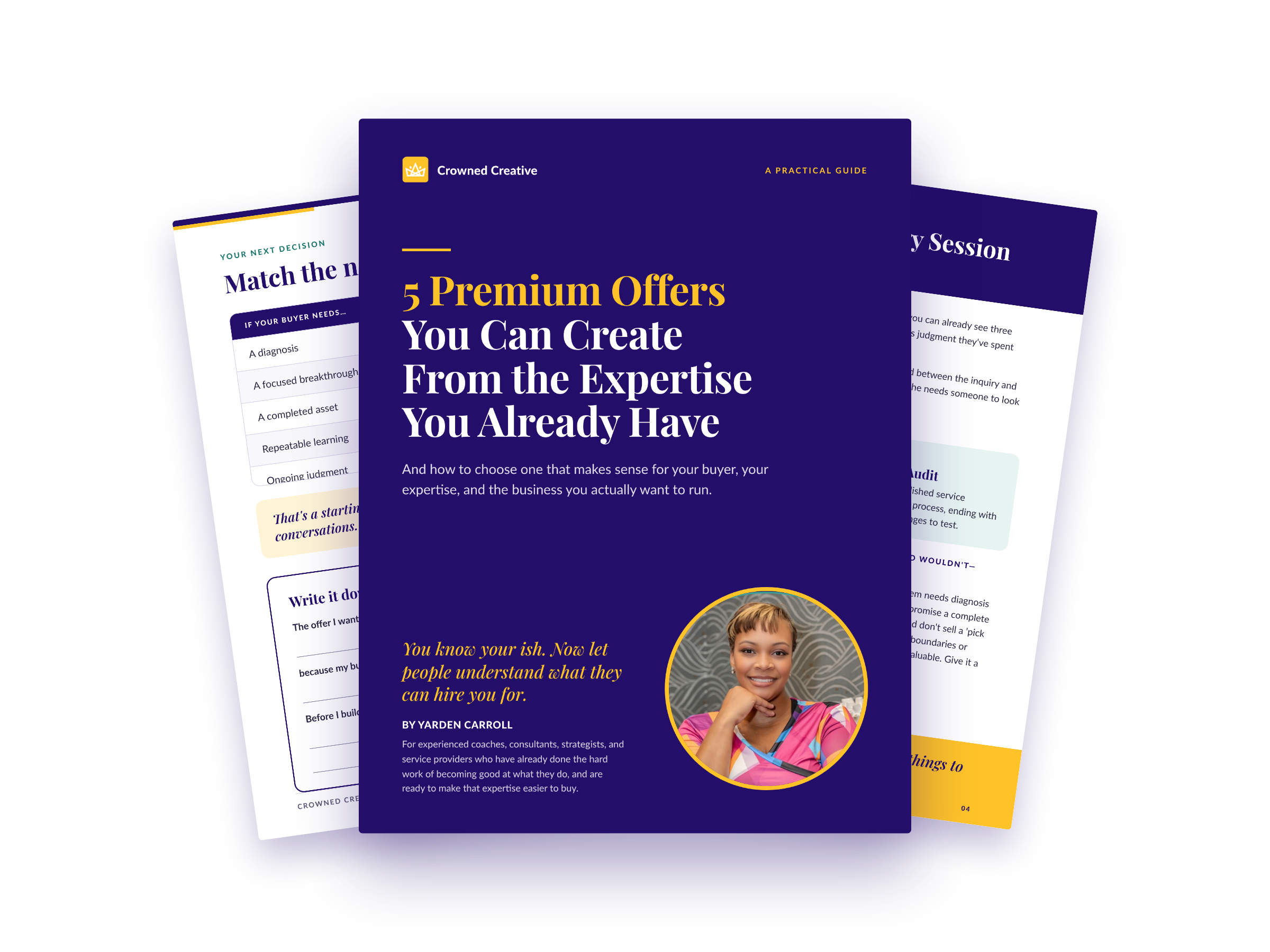
Get the free guide: 5 Premium Offers You Can Create From the Expertise You Already Have
Five premium offer models. Real-world examples. A clearer way to think about what you're selling — so you can stop second-guessing how to package your expertise and start building an offer people actually want to buy.
Free download.
Booked & Unbothered: Off the Mic
Every week I share messaging frameworks, marketing insights, AI tools, and business growth strategies that help coaches, consultants, and service providers build businesses that convert without burnout.